


 English
 中文简体
中文简体 русский
 Español
 Deutsch
 عربى
عربىCar Seat Cover Factory and Accessories Factory development is gradually aligning with recyclable material strategies, where interior automotive components are designed with reuse, material recovery, and reduced waste generation in mind. As vehicle ownership patterns and environmental considerations evolve, attention shifts toward how seat covers and supporting accessories can be structured for longer material life cycles and easier end-of-life handling.
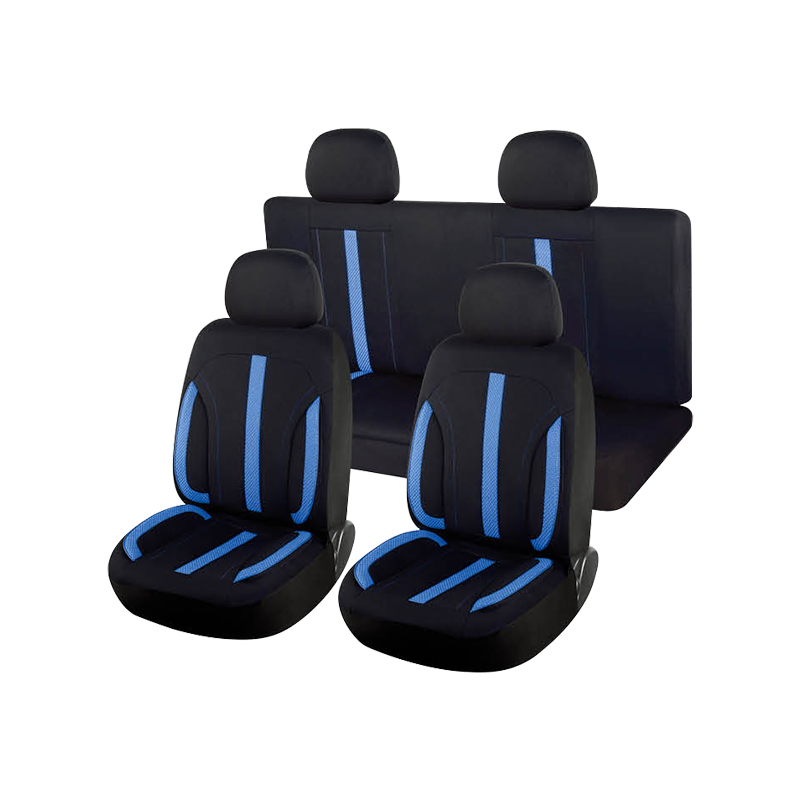
Environmental Pressure and Automotive Interior Waste
Automotive interiors contribute a notable portion of non-metal vehicle waste due to frequent replacement cycles of seat covers, trims, and accessory components. Traditional interior materials often combine mixed textiles, foams, and coatings, which can be difficult to separate during recycling processes.
Car Seat Cover Factory production planning is increasingly influenced by this challenge, especially as manufacturers and users consider how interior components may be reused or processed after extended use. Instead of focusing only on initial installation, material design now also considers what happens after removal or replacement.
Accessories Factory systems are also part of this transition. Many interior accessories include composite plastics, metal fittings, and textile combinations. When these elements are not designed for separation, recycling becomes more complex, and material recovery rates are affected.
Key sustainability-related challenges include:
- Mixed-material construction in seat covers
- Difficulty in separating layered components
- Short replacement cycles in shared mobility vehicles
- Limited reuse pathways for accessory parts
These conditions encourage more structured material planning at the production stage.
Material Design Shift Toward Recyclable Structures
Recyclable automotive solutions in seat cover production often start with material simplification. Instead of combining multiple incompatible layers, designers aim to use materials that can be separated or processed more efficiently at the end of their use cycle.
Car Seat Cover Factory processes may involve selecting single-family polymers or fabric blends that can be processed through similar recycling channels. Stitching methods and adhesives are also considered, as excessive bonding between layers can reduce material recovery efficiency.
Accessories Factory components are adjusted in parallel. Fasteners, connectors, and structural supports are increasingly designed with detachable or modular systems. This allows parts to be separated without damaging surrounding materials, supporting partial reuse or recycling.
Common recyclable design considerations
- Reduction of mixed-material bonding layers
- Use of detachable fastening systems
- Standardized material categories for easier sorting
- Modular accessory components for partial replacement
These design approaches support material recovery without requiring full system redesigns.
Application Scenarios in Vehicle Lifecycle Use
Recyclable seat cover and accessory systems are applied across different stages of vehicle use, from private ownership to fleet operations. In private vehicles, interior components are often replaced due to wear or aesthetic updates, creating opportunities for material recovery if structures are designed for separation.
In shared mobility and ride-hailing fleets, seat covers experience more frequent replacement cycles. This makes them a relevant area for recyclable design, as materials enter replacement streams more regularly. Accessories Factory components such as clips, straps, and modular inserts can be reused across multiple cycles if designed for compatibility.
Commercial transport vehicles, including delivery and service fleets, also contribute to interior material turnover. In these environments, recyclable systems help reduce accumulation of non-recoverable waste during periodic maintenance.
Usage Observations and Material Recovery Patterns
Field observations from automotive interior maintenance show that material recovery behavior depends heavily on design structure rather than usage conditions alone. Seat covers with simpler construction layers are generally easier to process after removal, while heavily bonded materials require additional separation steps.
A typical recovery-related breakdown can be summarized as:
- Single-material textile covers: easier to process through recycling streams
- Multi-layer bonded covers: require separation before processing
- Modular accessory systems: allow partial reuse of components
- Composite interior systems: may have limited recovery efficiency
In fleet environments, some operators track replacement cycles to align disposal timing with recycling collection schedules. Accessories Factory components with detachable design are often sorted separately for reuse or material processing.
Example: Material Lifecycle Flow in Fleet Usage
|
Stage |
Seat Cover Condition |
Accessory Condition |
Material Outcome |
|
Installation |
New assembly |
New components |
Full system use |
|
Mid-cycle use |
Wear on surface layer |
Minor adjustment needed |
Partial accessory reuse |
|
Replacement phase |
Seat cover removed |
Some parts retained |
Material separation |
|
End-of-cycle |
Cover sent for processing |
Reusable fittings sorted |
Recycling or reuse |
This type of lifecycle structuring helps reduce unnecessary disposal of functional components.
Industry Direction: Circular Design in Interior Systems
The shift toward recyclable automotive solutions reflects a broader movement in interior system design, where materials are evaluated not only for in-use performance but also for post-use processing. Car Seat Cover Factory production is increasingly connected with lifecycle planning, where material selection, stitching methods, and assembly techniques are considered in relation to recycling pathways.
Accessories Factory integration supports this direction by enabling modular design systems that reduce dependency on fully integrated, non-separable components. This allows partial replacement and component reuse, which aligns with circular material handling practices.
Rather than treating recyclability as a post-production process, more interior systems now integrate it into early design decisions. This includes selecting compatible material families and designing fastening systems that allow controlled disassembly.




 +86 576-83710338
 +86 576-83711188
 No.1 Market Road,Tantou Industrial Zone,Tiantai County, Taizhou City, Zhejiang, China
