


 English
 中文简体
中文简体 русский
 Español
 Deutsch
 عربى
عربىCar Seat Cover Factory and Accessories Factory development has increasingly placed attention on breathable fabric structures as vehicle interiors face more continuous daily usage in urban transport environments. Instead of treating seat covers as simple protective layers, more design decisions now consider airflow behavior, moisture dispersion, and long-duration seating comfort under varying climate and usage conditions.
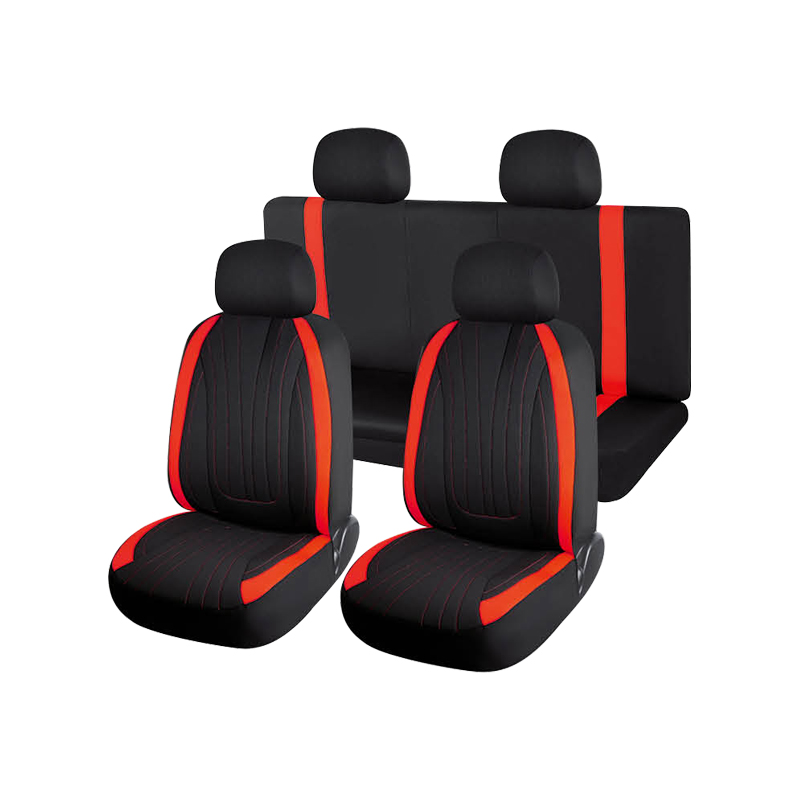
Background: Interior Heat and Moisture Accumulation in Daily Use
Vehicle interiors naturally experience temperature variation, especially in regions with strong seasonal changes or prolonged sunlight exposure. When seat surfaces are exposed to heat buildup, users often feel discomfort during extended driving periods. This becomes more noticeable in commuting traffic, where vehicles remain occupied for long durations without significant ventilation changes.
Car Seat Cover Factory production planning takes this into account by addressing how fabric layers interact with airflow. Dense or non-ventilated materials may trap heat and moisture between the seat surface and the user, gradually affecting sitting comfort during repeated use.
Accessories Factory components also connect with this issue, as supporting items such as padding layers and fastening structures can influence how tightly fabric sits against seat surfaces. If airflow pathways are restricted, ventilation performance becomes limited even when the base material has breathable properties.
Key practical challenges in this area include:
- Heat retention during long driving sessions
- Moisture buildup from body contact
- Limited air circulation in dense fabric structures
- Variation in seat shapes affecting airflow channels
These conditions have encouraged a shift toward fabric systems that support air movement rather than fully sealed coverings.
Material Structure and Fabric Development Direction
Breathable fabric design in seat cover production is often based on layered textile structures. Instead of relying on a single dense material, multiple layers are arranged to allow controlled air movement while maintaining surface protection.
A typical breathable structure may include:
- Outer layer for surface contact resistance
- Middle layer designed for airflow channels
- Inner layer that supports seat contour alignment
This layered approach allows air exchange between the seat surface and the user, especially during movement or changes in body temperature.
Accessories Factory components also contribute by supporting tension balance across the seat surface. Straps, mesh inserts, and elastic fastening systems help prevent excessive compression of fabric layers, which can reduce airflow efficiency.
|
Fabric Element |
Function in Seat Cover Design |
|
Mesh Layer |
Supports airflow distribution |
|
Elastic Binding |
Maintains seat fitting stability |
|
Perforated Textile |
Allows localized ventilation |
|
Reinforced Stitching |
Supports long-term structural stability |
These elements are combined based on vehicle type and usage environment rather than a single fixed design approach.
Application Scenarios in Urban and Long-Distance Driving
Breathable seat cover designs are commonly applied in vehicles used for daily commuting, ride-sharing, and extended driving periods. In urban traffic conditions, vehicles often remain occupied for long durations without significant speed variation, which can reduce natural airflow inside the cabin.
In shared transportation services, frequent passenger turnover introduces repeated body heat transfer to seat surfaces. Breathable fabric systems help reduce heat accumulation between short usage intervals, allowing seats to return closer to ambient conditions more quickly.
For long-distance driving, particularly in private vehicles or commercial transport, seating comfort becomes closely related to airflow consistency. When seat covers allow continuous ventilation, pressure buildup on contact areas may feel less concentrated during extended periods.
Accessories Factory products such as ventilated cushions and adjustable fastening systems further support these applications by maintaining fabric spacing and reducing full surface compression.
Usage Observations and Practical Feedback
Field observations from everyday vehicle use indicate that breathable seat cover structures influence user experience in several practical ways. These observations are not limited to comfort perception but also relate to maintenance and usability patterns.
Common usage notes include:
- Seats with mesh-based covers tend to dry faster after cleaning compared to fully sealed fabrics
- Air-permeable materials show less heat retention during midday parking conditions
- Elastic support systems help maintain airflow gaps during repeated seating pressure
- Layered fabric structures are easier to adjust for different seat shapes
In ride-sharing environments, operators often prefer seat covers that can be removed and reinstalled quickly without affecting airflow structure. Accessories Factory components play a role in this process by providing standardized fastening systems that support repeated installation cycles.
|
Usage Condition |
Non-Breathable Cover |
Breathable Fabric Cover |
|
Short urban trips |
Heat builds faster |
Heat disperses gradually |
|
Long driving time |
Moisture retention noticeable |
Air circulation maintained |
|
Frequent cleaning |
Longer drying time |
Faster surface drying |
These patterns reflect general operational behavior rather than fixed performance outcomes.
Industry Direction and Material System Integration
Seat cover development is gradually moving toward integrated interior systems where fabric design is considered together with accessory components. Car Seat Cover Factory processes are increasingly aligned with Accessories Factory production to ensure compatibility between textiles, fastening systems, and interior layouts.
Rather than focusing only on surface protection, more attention is placed on how materials interact with seat structure, ventilation channels, and daily usage patterns. Breathable fabric design is part of this broader shift, where airflow and usability are considered alongside durability and installation flexibility.
This approach also supports modular interior customization, allowing users to adjust or replace components without changing the entire seat structure. In this context, breathable fabrics are not isolated features but part of a coordinated interior system.
Frequently Asked Questions
- Why is breathable fabric important for car seat covers?
Breathable fabric helps support airflow between the seat surface and the user, which can reduce heat and moisture buildup during extended use.
- Do breathable seat covers affect durability?
Durability depends on material composition and stitching structure. Breathable designs often use layered textiles to balance airflow and structural stability.
- Can breathable seat covers be used in all climates?
They are commonly used in both warm and moderate climates. In colder regions, additional layering may be applied depending on user preference.
- How do Accessories Factory components support breathable designs?
Accessories such as elastic straps and mesh supports help maintain spacing in the fabric structure, allowing airflow channels to remain open during use.
- Are breathable seat covers harder to maintain?
Maintenance is generally similar to standard covers. In some cases, breathable materials may dry faster after cleaning due to airflow properties.
 +86 576-83710338
 +86 576-83711188
 No.1 Market Road,Tantou Industrial Zone,Tiantai County, Taizhou City, Zhejiang, China
