


 English
 中文简体
中文简体 русский
 Español
 Deutsch
 عربى
عربىVehicle seating systems have evolved into complex safety platforms that integrate side airbags, occupant detection sensors, and active head restraint mechanisms. This development has placed greater responsibility on every Car Seat Cover Factory to ensure that each Car Seat Cover does not interfere with these built-in safety functions. What was once a simple protective accessory now requires careful engineering, regulatory awareness, and compatibility testing. Poorly designed covers can obstruct airbag deployment paths or affect sensor accuracy, which makes proper design and selection essential for both manufacturers and vehicle owners.
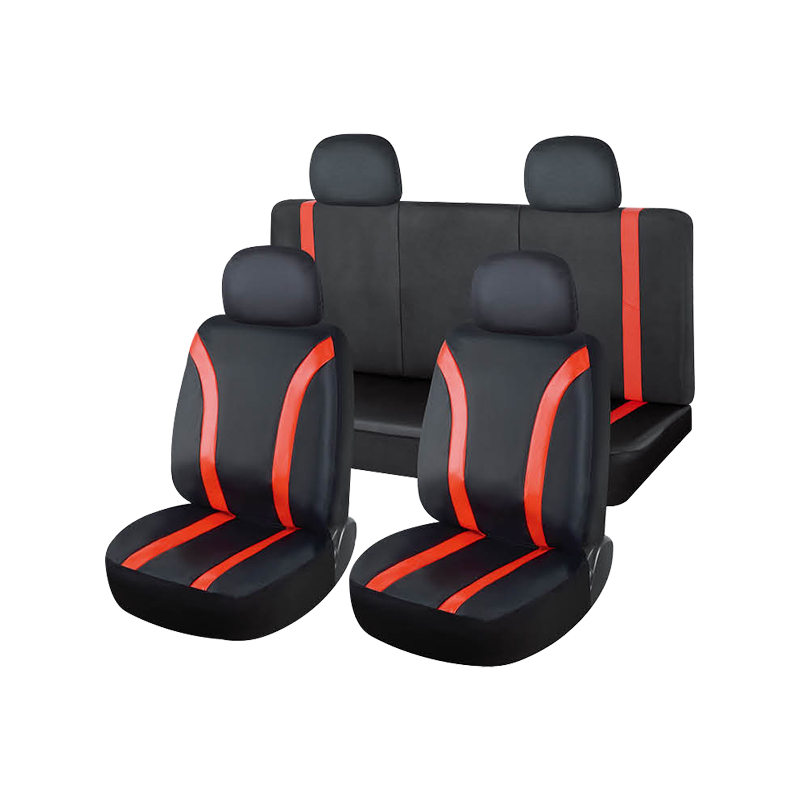
Why Modern Seat Covers Must Adapt to Integrated Safety Systems
Automotive seats today perform more than a structural and comfort role. Many contain side-impact airbags installed within the seatback, designed to deploy outward through specific seam zones during a collision. These airbags deploy within milliseconds, and their effectiveness depends on a clear and predictable deployment path.
If a seat cover blocks or alters this path, it may delay deployment or redirect the airbag, which can affect occupant protection. This makes seam positioning, stitching strength, and material tear characteristics critical design elements.
Occupant classification sensors are another important consideration. These sensors detect weight distribution and seating position to determine airbag activation thresholds. Thick or poorly fitted covers may alter pressure distribution, which could influence how the system interprets occupant presence. Properly engineered covers maintain consistent contact between the occupant and the seat surface, allowing sensors to function as intended.
Active head restraint systems, which move forward during rear-end collisions to reduce neck injury risk, also require unrestricted mechanical movement. Seat covers must allow these mechanisms to operate without additional resistance or restriction.
These integrated safety features have transformed seat cover design from a general accessory into a component that must function in harmony with vehicle safety systems.
How Regulations Like AIS-016 Are Influencing Seat Cover Design
Global automotive safety regulations increasingly address seat-integrated airbag compatibility, including standards such as AIS-016 in India. This regulation defines performance and safety requirements related to seating systems, including structural strength, anchorage performance, and compatibility with safety features.
While AIS-016 primarily governs seat structures, its influence extends to aftermarket components that interact with those seats. Manufacturers must ensure that additional layers, including seat covers, do not alter safety performance.
Testing protocols associated with safety standards often evaluate deployment clearance, material tear behavior, and structural resistance under simulated crash conditions. Materials must tear in controlled ways when airbags deploy, allowing the airbag to pass through without obstruction.
This regulatory environment encourages manufacturers to design covers with predictable material behavior, controlled seam strength, and proper alignment with airbag deployment zones. Compliance considerations also encourage better documentation of compatibility with specific seat models.
As safety regulations continue to evolve across global markets, seat cover manufacturers are adjusting their design, testing, and verification processes to align with vehicle safety requirements.
What Engineering Methods Help Seat Covers Support Safety Compatibility
Seat cover design for safety compatibility involves precise engineering decisions across multiple areas:
- Airbag-compatible seam construction
Specialized seams are designed to open under specific pressure levels, allowing airbags to deploy through designated zones without resistance.
- Material tear characteristics control
Fabric layers are selected and tested to ensure they respond predictably during deployment, avoiding unpredictable tearing patterns.
- Precision pattern alignment
Covers are shaped to align accurately with airbag modules and deployment paths built into the seat.
- Sensor-compatible material thickness
Materials are selected to avoid interfering with occupant detection sensors or altering pressure distribution excessively.
Fit accuracy verification
Close-fitting designs help prevent shifting, bunching, or misalignment that could affect safety feature operation.
These engineering considerations help ensure compatibility between seat covers and integrated seat safety systems.
Why Custom-Fit Designs Provide Greater Safety Assurance
Custom-fit seat covers are designed around specific seat geometries, taking into account airbag placement, seam alignment, and sensor locations. Unlike universal covers, which attempt to fit multiple seat types, custom-fit designs follow precise measurements of the seat structure.
This precision helps maintain alignment between airbag deployment zones and the corresponding tear seams in the cover. When alignment is correct, airbag deployment forces interact with the intended seam areas rather than random fabric sections.
Custom-fit designs also reduce material shifting during use. Loose covers may move over time, potentially altering seam positioning relative to airbag modules. A properly fitted cover stays in place, preserving consistent alignment.
Additionally, custom-fit covers can accommodate seat adjustment mechanisms, integrated electronics, and structural contours without placing unnecessary stress on sensitive components.
Manufacturers typically use vehicle-specific templates, digital measurement systems, or physical seat scanning to develop these designs. This approach helps ensure compatibility across different vehicle models and seat configurations.
 +86 576-83710338
 +86 576-83711188
 No.1 Market Road,Tantou Industrial Zone,Tiantai County, Taizhou City, Zhejiang, China
