


 English
 中文简体
中文简体 русский
 Español
 Deutsch
 عربى
عربىAs automotive aftermarket buyers expand their product ranges, vehicle compatibility has become an important part of car seat cover development. Different seat shapes, headrests, folding mechanisms, controls, and interior layouts can make a universal design difficult to apply across multiple models. For distributors and automotive accessory brands, working with an experienced Car Seat Cover Factory can simplify the transition from vehicle information to production-ready seat covers.
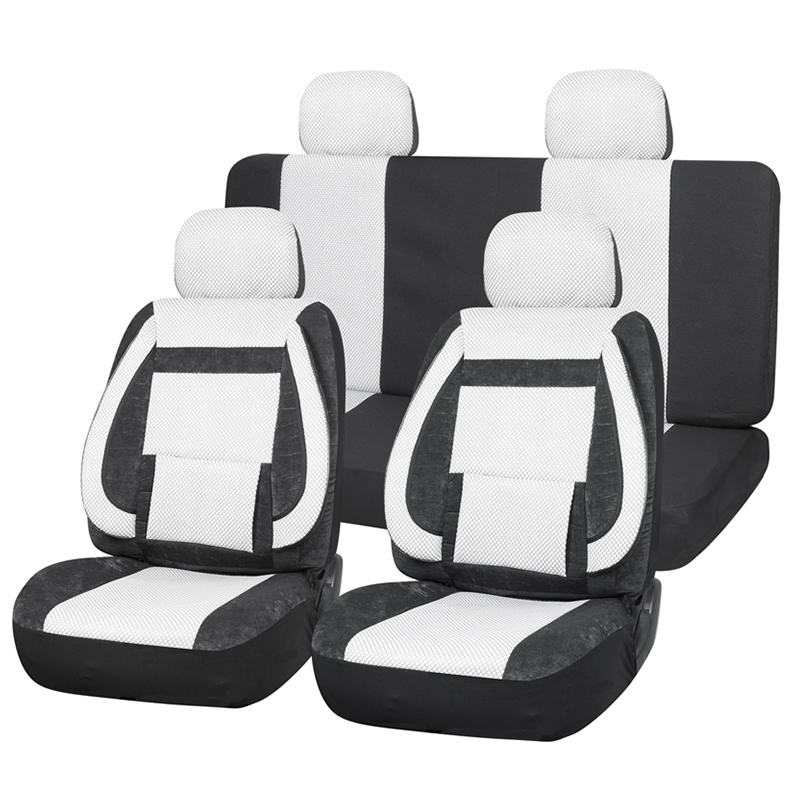
Vehicle Compatibility Starts With Accurate Information
A seat cover cannot be developed properly from the vehicle name alone. Even vehicles from the same model family may have different seat configurations depending on the market, trim level, production year, or equipment package.
For buyers developing custom car seat covers, providing accurate reference information at the beginning can help manufacturers establish the correct pattern and identify potential fitting issues before production. Photos, dimensions, seat samples, technical drawings, or other available references can all contribute to a more reliable development process.
Seat Structure Influences the Final Design
Modern vehicle seats often include features that affect how a cover needs to be constructed. Headrests, armrests, seat controls, folding sections, rear pockets, and other functional areas may require specific openings or separate pattern pieces.
A well-designed cover should follow the structure of the original seat rather than simply covering its overall surface. This approach helps preserve access to important functions while creating a cleaner appearance after installation.
For manufacturers, the development stage is therefore not simply a matter of cutting fabric. Pattern construction, material behavior, stitching positions, and assembly methods all need to work together.
Fit and Installation Need to Be Considered Together
A good fit is valuable only when the product can also be installed in a practical way. If a cover is excessively tight, installers may spend more time positioning it. If it is too loose, unwanted movement or wrinkles may become more noticeable during use.
When developing vehicle-specific seat covers, manufacturers can evaluate:
- Seat contours and major dimensions
- Attachment points and fastening areas
- Headrest and armrest positions
- Folding or movable seat sections
- Clearance around seat controls
- Installation sequence and adjustment points
Considering these factors during product development can reduce the need for corrections after mass production begins.
Safety-Related Features Require Careful Attention
Some vehicle seats incorporate functional features that should not be obstructed by aftermarket accessories. Buyers therefore need to communicate the relevant seat configuration to the manufacturer before approving a design.
The goal is not simply to create a visually complete cover. The product should be developed with the intended seat structure and its functional areas in mind. For international distributors, documenting these requirements for each vehicle application can also make product selection easier for downstream installers.
Building a Multi-Model Product Range
For automotive accessory brands, one successful design may lead to requests for additional vehicle models. This is where a structured development process becomes valuable.
Instead of treating every new model as an independent project, manufacturers can organize vehicle applications by pattern, material, color, stitching, and configuration. A standardized internal process can make it easier to introduce new references while maintaining the intended design language across a product range.
This is particularly useful for buyers who want to build a recognizable seat-cover collection rather than sell unrelated universal products.
Customization Should Remain Practical for Production
Personalization continues to influence automotive interior accessories, with buyers showing interest in customized styling and upgraded interior materials. Industry coverage in 2026 also points to continued attention to personalized vehicle interiors and premium material choices.
However, customization needs to be balanced with production efficiency. Too many variations in stitching, materials, patterns, or fastening systems can increase manufacturing complexity.
From a manufacturer's perspective, the most practical solution is to identify which elements genuinely differentiate the product and which can remain standardized. This allows brands to create distinctive designs without making every production stage unnecessarily complicated.
Why Development Capability Matters to Buyers
Choosing a car seat cover supplier is not only about finding a factory capable of sewing finished products. Product development capability can be equally important when buyers are targeting multiple vehicle applications.
A capable Car Seat Cover Factory should be able to work with vehicle references, develop suitable patterns, communicate technical details clearly, produce samples for evaluation, and transfer approved designs into repeatable production. For overseas buyers, this development-to-production connection can make it easier to expand product lines while keeping fit, appearance, and manufacturing requirements under control.
 +86 576-83710338
 +86 576-83711188
 No.1 Market Road,Tantou Industrial Zone,Tiantai County, Taizhou City, Zhejiang, China
